 Markus StockhausenandRobert Marko
4eee4c29ea
Markus StockhausenandRobert Marko
4eee4c29ea
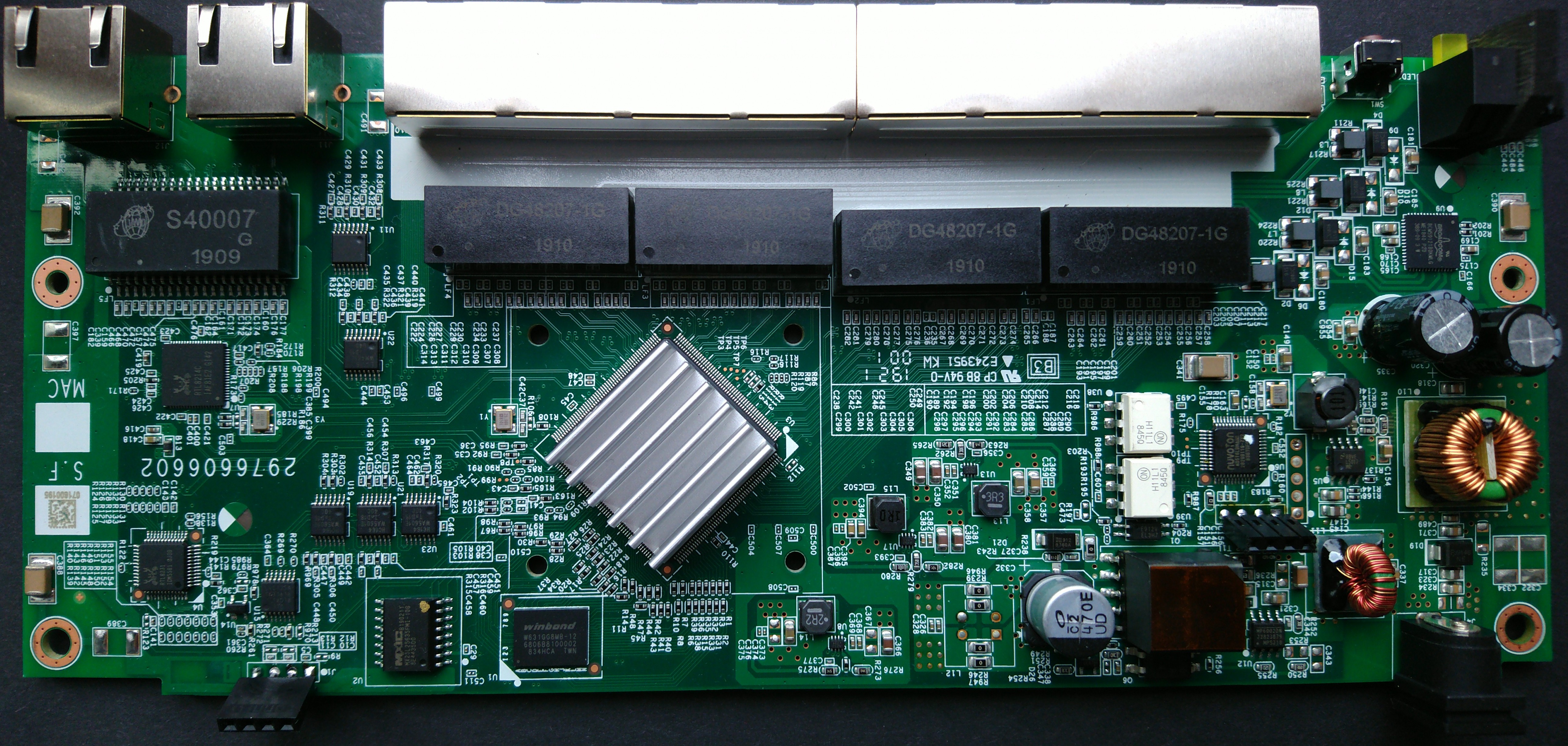
The Netgear GS110TPP uses an RTL8214C to drive ports 9 and 10. The
DTS is missing the corresponding serdes assignment. From looking at
[1] it seems to be connected to pins 82-85 (serdes 2). Add that
definition. With that the last improper use of SWITCH_PORT() macro
is sorted out.

Remark: I do not own this device. The patch just resembles what
the picture [1] shows.

[1] https://svanheule.net/switches/_media/wiki/gs110tpp-top.jpg

Signed-off-by: Markus Stockhausen <markus.stockhausen@gmx.de>
Link: https://github.com/openwrt/openwrt/pull/22232
Signed-off-by: Robert Marko <robimarko@gmail.com>
68 lines
1.2 KiB
Devicetree
68 lines
1.2 KiB
Devicetree
// SPDX-License-Identifier: GPL-2.0-or-later
|
|
|
|
#include "rtl8380_netgear_gigabit.dtsi"
|
|
#include <dt-bindings/leds/common.h>
|
|
|
|
/ {
|
|
compatible = "netgear,gs110tpp-v1", "realtek,rtl838x-soc";
|
|
model = "Netgear GS110TPP v1";
|
|
|
|
aliases {
|
|
led-boot = &led_status_green;
|
|
led-failsafe = &led_status_red;
|
|
led-running = &led_status_green;
|
|
led-upgrade = &led_status_blue;
|
|
};
|
|
|
|
leds {
|
|
compatible = "gpio-leds";
|
|
|
|
led_status_red: led-0 {
|
|
color = <LED_COLOR_ID_RED>;
|
|
function = LED_FUNCTION_STATUS;
|
|
gpios = <&gpio1 31 GPIO_ACTIVE_LOW>;
|
|
};
|
|
|
|
led_status_green: led-1 {
|
|
color = <LED_COLOR_ID_GREEN>;
|
|
function = LED_FUNCTION_STATUS;
|
|
gpios = <&gpio1 32 GPIO_ACTIVE_LOW>;
|
|
};
|
|
|
|
led_status_blue: led-2 {
|
|
color = <LED_COLOR_ID_BLUE>;
|
|
function = LED_FUNCTION_STATUS;
|
|
gpios = <&gpio1 34 GPIO_ACTIVE_LOW>;
|
|
};
|
|
};
|
|
};
|
|
|
|
&gpio1 {
|
|
poe-enable {
|
|
gpio-hog;
|
|
gpios = <10 GPIO_ACTIVE_HIGH>;
|
|
output-high;
|
|
line-name = "poe-enable";
|
|
};
|
|
};
|
|
|
|
&firmware {
|
|
openwrt,ih-magic = <0x4e474520>;
|
|
};
|
|
|
|
&uart1 {
|
|
status = "okay";
|
|
};
|
|
|
|
&mdio_bus0 {
|
|
EXTERNAL_PHY(16)
|
|
EXTERNAL_PHY(17)
|
|
};
|
|
|
|
&switch0 {
|
|
ethernet-ports {
|
|
SWITCH_PORT_SDS(16, 9, 2, qsgmii)
|
|
SWITCH_PORT_SDS(17, 10, 2, qsgmii)
|
|
};
|
|
};
|